Conversations for a Better World
UNFPA has launched: Conversations for a Better World. The blog is created and produced by the Media and Communications Branch of UNFPA, the United Nations Population Fund. The aim is to foster dialoge between young people, development experts, policymakers, NGOs, faith-based organizations, bloggers, decision-makers, and activists.


The Nestlé Prize in Creating Shared Value
The Nestlé Prize in Creating Shared Value will be awarded every other year to an individual, a non-governmental organization (NGO), or a business for developing an outstanding innovation that:
1. has proven its worth on a small-scale;
2. is judged to be feasible and applicable on a broader scale or in other communities; and
3. has high promise of improving rural development, improving nutrition, improving access to clean water, or having a significant impact on water management.
To nominate an individual, an NGO, or a small enterprise for an outstanding innovation in water, nutrition or rural development, please read the Official Rules and use the Nomination Form.
1. has proven its worth on a small-scale;
2. is judged to be feasible and applicable on a broader scale or in other communities; and
3. has high promise of improving rural development, improving nutrition, improving access to clean water, or having a significant impact on water management.
To nominate an individual, an NGO, or a small enterprise for an outstanding innovation in water, nutrition or rural development, please read the Official Rules and use the Nomination Form.
Microscope extension for cameraphones
This low-cost solution is used for telemedicine applications in developing worlds, where access to cellphone networks are more prevalent.
D.N. Breslauer, R.N. Maamari, N.A. Switz, W.A. Lam, D.A. Fletcher, "Mobile Phone Based Clinical Microscopy for Global Health Applications", PLoS ONE 4(7): e6320, 2009. [Article]
D.N. Breslauer, R.N. Maamari, N.A. Switz, W.A. Lam, D.A. Fletcher, "Mobile Phone Based Clinical Microscopy for Global Health Applications", PLoS ONE 4(7): e6320, 2009. [Article]
Light microscopy provides a simple, cost-effective, and vital method for the diagnosis and screening of hematologic and infectious diseases. In many regions of the world, however, the required equipment is either unavailable or insufficiently portable, and operators may not possess adequate training to make full use of the images obtained. Counterintuitively, these same regions are often well served by mobile phone networks, suggesting the possibility of leveraging portable, camera-enabled mobile phones for diagnostic imaging and telemedicine. Toward this end we have built a mobile phone-mounted light microscope and demonstrated its potential for clinical use by imaging P. falciparum-infected and sickle red blood cells in brightfield and M. tuberculosis-infected sputum samples in fluorescence with LED excitation.
Open Screen Project Fund
The $10 million Open Screen Project Fund is awarding grants to developers of exciting new applications and content through January 2011. The fund invites submissions for initiatives that focus on developing Flash Lite from Adobe content for use on Nokia platforms and devices. The fund also supports marketing and education for the Open Screen Project, which aims to establish cross-platform runtime environments, remove development and distribution barriers, and innovate through industry collaboration.
Product Design for the Developing World
Product Design for the Developing World course taught by the California Institute of Technology. The class involved students from Caltech, California's Art Center College of Design, and Guatemala's Landivar Univeristy, with the combined skills and perspectives present within the group sparking prototypes for a variety of products designed for the people living on less than two dollars a day.
Business plan competition for agricultural cooperatives and farmers associations
The Farmers in Business is a a business plan competition aimed at Agricultural Cooperatives and Farmers Associations in developing countries who seek finance to start or to grow their businesses. This competition is promoted by Agriterra with the tecnical support of BiD Network. For more information about this competition and how to submit your business plan see Farmers in Business. Competition deadline on 15 November 2009.
Outstanding Postdoctoral Entrepreneur Award
The Ewing Marion Kauffman Foundation and the National Postdoctoral Association (NPA) announced that nominations have opened for the inaugural Kauffman Foundation Outstanding Postdoctoral Entrepreneur Award, which recognizes and celebrates a scientific researcher who has successfully commercialized his or her discoveries through entrepreneurship. Nomination forms are available at the National Postdoctoral Association's website.
Open Softwear
Open Softwear is a free book introducing basic concepts about microcontroller programming through Arduino, and using it in when crafting interactive garments.
Broadband in the Andes
After the wave of neo-liberal policies during the 90s, the Andean region has seen important changes. The State played a larger role and the telecommunications policies that were put in place reflected this change. Under these new circumstances, broadband plays a critical role in the social and economic development of the region and its people. In order to better understand the new opportunities and challenges that are emerging as a result of the current political and economic landscape, APC conducted a series of studies in Bolivia, Colombia, Ecuador, Peru and Venezuela from a civil society perspective. The objective of the study is to devise informed propositions so that the expansion and development process around broadband is supported by inclusive and democratic policies.
Safe Water at the Base of the Pyramid
IFC recently issued Safe Water for All, a report about the opportunities for the private sector in delivering clean water to the base of the pyramid.
Bill Gates and Richard Feynman
Bill Gates has a dream of taking some classic physics lectures and making them available free over the Web. The lectures, done in 1964 by Richard Feynman, take notions such as gravity and explains how it work. Gates is making the collection available free from the Microsoft Research Web site.
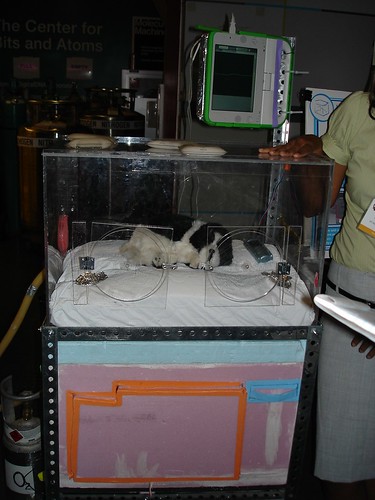
Infant Incubator for Rural Health Centers
The goal of the project is to improve the first prototype developed in the IDDS 2008 at MIT. The purpose is to develop a set of low-cost modules for the infant incubator. The first proposal is to engineer a monitoring system which will record, graph and adjust the main parameters as temperature and humidity.
Our next steps are to develop the modular design of the infant incubator including alternative sources of power, heating/humidifier option, filtering system, pulse oxymeter, storage drawers and so on. When we build our ultimate prototype, we will be ready for field trials in Peru and other potential locations in Latin America. To define our business strategy, we will make market feasibility studies.
Components
The project will be implemented through four components:
a) Component I: Assessment of hardware and software
Through this component, open source hardware and software will be identified, assessed and clearly defined, based on a multidimensional analysis of technical feasibility including the identification of potential bottlenecks and critical factors in implementing this system in rural environments. This component is expected to produce a baseline documented and developed in accordance with clearly defined parameters and criteria.
b) Component II: Design of monitoring system
The purpose of this component is to propose the most viable solution for the monitoring system including safety standards, interface criteria, availability of materials and portability of the equipment. To this end, the component calls for preparing a technical proposal for developing the software which will include a graph option to see data, an automatic adjustment of parameters, recording of data and a warning system. This component is expected to produce technology and software for the new monitoring system developed and ready for integrating this module to our prototype of infant incubator.
c) Component III: Development of control system, interfaces, hardware assembling and software modules.
The objective of this component is to establish and build the monitoring system. At a minimum, the following outcomes are anticipated from this component:
- The controller is based on micro computerized system.
- Detachable monitoring system unit.
- Individual sensor for air and skin.
- The digital display system provided to set the required temperature as well as to measure infant’s temperature and air temperature.
- Displays RH.
- Memory back-up.
- Comprehensive alarms: Air Temperature Low / High, Skin Temperature Low / High, Sensor Failure, Low Battery, Heater Failure, Power Failure and Fan Failure.
d) Component IV: Testing and Debugging. Evaluate the experience gained.
The objective of this component is to capture, evaluate and disseminate the project activities and outcomes, and gain a better understanding of how to design low-cost modules for our infant incubator. The following activities will be carried out to attain this objective:
- Establish a set of test and record data to verify safety and appropriateness of our prototype.
- Develop a manual for the construction of this monitoring system.
- Disseminate the lessons learned via Appropedia and interviews to local partners.
The executing organism for the project will be Quantum Solutions, a private Think Tank and Social Business Incubator. This organization has the legal, administrative and financial capacity to implement all project activities. Additionally, an executing unit will be created in order to support project activities. To support and facilitate the tasks to be performed for program activities, a technical team will be created. The technical team will consist of two consultants: an electronic engineer and a software engineer. These representatives will monitor and oversee project execution and support the executing unit so that it is able to perform its tasks efficiently.
Our next steps are to develop the modular design of the infant incubator including alternative sources of power, heating/humidifier option, filtering system, pulse oxymeter, storage drawers and so on. When we build our ultimate prototype, we will be ready for field trials in Peru and other potential locations in Latin America. To define our business strategy, we will make market feasibility studies.
Components
The project will be implemented through four components:
a) Component I: Assessment of hardware and software
Through this component, open source hardware and software will be identified, assessed and clearly defined, based on a multidimensional analysis of technical feasibility including the identification of potential bottlenecks and critical factors in implementing this system in rural environments. This component is expected to produce a baseline documented and developed in accordance with clearly defined parameters and criteria.
b) Component II: Design of monitoring system
The purpose of this component is to propose the most viable solution for the monitoring system including safety standards, interface criteria, availability of materials and portability of the equipment. To this end, the component calls for preparing a technical proposal for developing the software which will include a graph option to see data, an automatic adjustment of parameters, recording of data and a warning system. This component is expected to produce technology and software for the new monitoring system developed and ready for integrating this module to our prototype of infant incubator.
c) Component III: Development of control system, interfaces, hardware assembling and software modules.
The objective of this component is to establish and build the monitoring system. At a minimum, the following outcomes are anticipated from this component:
- The controller is based on micro computerized system.
- Detachable monitoring system unit.
- Individual sensor for air and skin.
- The digital display system provided to set the required temperature as well as to measure infant’s temperature and air temperature.
- Displays RH.
- Memory back-up.
- Comprehensive alarms: Air Temperature Low / High, Skin Temperature Low / High, Sensor Failure, Low Battery, Heater Failure, Power Failure and Fan Failure.
d) Component IV: Testing and Debugging. Evaluate the experience gained.
The objective of this component is to capture, evaluate and disseminate the project activities and outcomes, and gain a better understanding of how to design low-cost modules for our infant incubator. The following activities will be carried out to attain this objective:
- Establish a set of test and record data to verify safety and appropriateness of our prototype.
- Develop a manual for the construction of this monitoring system.
- Disseminate the lessons learned via Appropedia and interviews to local partners.
The executing organism for the project will be Quantum Solutions, a private Think Tank and Social Business Incubator. This organization has the legal, administrative and financial capacity to implement all project activities. Additionally, an executing unit will be created in order to support project activities. To support and facilitate the tasks to be performed for program activities, a technical team will be created. The technical team will consist of two consultants: an electronic engineer and a software engineer. These representatives will monitor and oversee project execution and support the executing unit so that it is able to perform its tasks efficiently.
Open Source Translation - The Manual
Open source translation tools will allow translators to share work with collaborators around the world. This manual was designed and written by a community of Open Translation innovators using the FLOSSManuals platform to collaboratively author the content.
The field of translation is in a state of transition, and software tools to support language translation are evolving with corresponding rapidity. Open Translation describes a nascent field of practice emerging at the crossroads of three dynamic movements: Open Content, The Free/Libre/Open Source Software and Open production. It is the set of practices and work processes for translating and maintaining open content using FLOSS tools, and leveraging the open nature of the internet to make that content and those tools and processes available to the largest number of contributors and consumers. It promises to profoundly broaden access to knowledge across language barriers.
The field of translation is in a state of transition, and software tools to support language translation are evolving with corresponding rapidity. Open Translation describes a nascent field of practice emerging at the crossroads of three dynamic movements: Open Content, The Free/Libre/Open Source Software and Open production. It is the set of practices and work processes for translating and maintaining open content using FLOSS tools, and leveraging the open nature of the internet to make that content and those tools and processes available to the largest number of contributors and consumers. It promises to profoundly broaden access to knowledge across language barriers.
The Fonera 2.0n
FON introduced the Fonera 2.0n WiFi router in the US market, combining FON’s revolutionary WiFi sharing and money making features with seamless integration and management of popular Web 2.0 services even while users’ PCs are off. For further information about the Fonera 2.0n, visit www.fon.com.
TechnoServe Business Plan Competition
TechnoServe is introducing its successful business plan competition model to help latinamerican entrepreneurs turn good ideas into businesses. The program will focus on small and medium businesses that benefit people at the bottom of the economic pyramid.
We made it through the first round of the "Idea Tu Empresa 2009" business plan competition in Peru. About 700 ideas were submitted and 80 ideas were selected as semifinalists to move forward to compete in Round 2 of the competition.
We made it through the first round of the "Idea Tu Empresa 2009" business plan competition in Peru. About 700 ideas were submitted and 80 ideas were selected as semifinalists to move forward to compete in Round 2 of the competition.
ICT for Economic Growth
Information and communication technologies (ICT) can serve as fundamental enablers for the global economic recovery according to the World Economic Forum whitepaper ICT for Economic Growth: A Dynamic Ecosystem Driving the Global Recovery.
Appropriate technology as a business opportunity IV
Community development activity has a strong tradition based on philanthropy and has often been the starting point for business sustainability in emerging markets. Companies have for some time recognized the need to ensure surrounding communities develop as a result of setting up a company’s operation, for example by the building of schools, hospitals, roads or water facilities.
On the other hand, environmental products & services are often part of a new business model, with the entire strategy based on environmental superiority going beyond just technology and encompassing the whole life cycle of the product (from raw material to disposal).There is a growing market for products and services that provide environmental benefits. It includes niche markets for environmental infrastructure and pollution abatement technologies, such as water supply, waste management, soil remediation, air and water pollution control, and other established environmental technologies. A distinct niche focuses on the growing demand for eco-efficiency, including industrial products and know-how which reduce the use of energy, water and other resources in production processes. There are also green niches of established industries that provide alternative ways of meeting market needs, such as renewable energy, sustainable agriculture, forestry and fisheries, and eco-tourism.
Analyzing environmental impacts throughout the life of products and services is recognized as increasingly important. Though much focus is placed on production processes, impacts that take place during the “use” and “disposal” phase can be very significant. Product stewardship, or embedding environmental principles in its products and/or services, can help reduce the overall impact of a product.
The focus of sustainability has shifted slowly from process improvements to products and services and this is likely to sharpen further as international efforts intensify to combat climate change and improve the impact of business on society. The development of environmental products and services by new businesses will present competition to existing suppliers which will also intensify activity in this area. Emerging markets are likely to continue to play an important role in the development of these markets.
Emerging markets have specific advantages over developed countries in building alternative product and service markets. For example, countries can leapfrog stages of technology in power, moving straight to off-grid renewable energy without ever having polluting power generation plants. Vast forests and concentrations of biodiversity represent natural capital not available in most developed countries, which may become valuable as carbon sinks or watershed protectors.
Cases described below presents the appropriate technology promotes the development of communities as well as provides benefits for business. Specific trends as environmental products and services are financially successful and even with a positive impact on image brand and reputation.
Natura, formed in 1969, sells cosmetics, personal hygiene products, perfumes and nutritional supplements throughout Latin America. Sales in 2001 were $630 million, an increase of 14% over the previous year. At the beginning of 2002 Natura employed 3,100 people directly, and had 286,000 sales consultants in Brazil.
The Natura Ekos line of hygiene and beauty products was launched in 2000, based on natural Brazilian flora extracted in a sustainable manner by local people. In partnership with Imaflora, a NGO which operates on FSC principles, Natura has also certified floral assets to guarantee that they are extracted in a sustainable manner.
Other environmental initiatives include supporting environmental restoration projects in the 650 hectare Fazenda Bulcão and of the Pomar project which promotes restoration of polluted areas on the banks of the Pinheiros River. Natura also partners with TV Culture, the public broadcasting station of São Paulo, on the Biodiversity Brazil project which includes production of documentaries and other programs about biodiversity in Brazil.
Solar Technologies in Nicaragua is a project lead by UNIDO (United Nations Industrial Development Organization). The project in Nicaragua includes the following components:
• Training of local experts for the design of solar panel projects
• Transfer of technologies and installation of the solar panels in service and industrial facilities
• Development of local capacity for the construction and assembling of solar panels for industrial applications
For example, a solar panel system was designed to respond to 77% of the hot water demand of a hotel in Nicaragua. (Total hotel demand: 30 MWh/year, it required 2x16 m2 collectors area). Another example is a solar panel system designed to respond to the heat requirement of a local industry from the food sector: used to heat several food products to a temperature up to 80°C (32 m2 collectors area for a capacity of 22.4 kWh).
New water pumps for farmers can play an important role in local or even international food value chains. The NGO “IDE” has developed a family of step-action foot pumps fro agricultural use, all can be manufactured locally from locally available metal and wood materials. Since 1985, 2 million have been installed worldwide. Different designs allow the use of different sources of water as rivers and groundwater. Another NGO “KickStart” has focused on developing appropriate technologies for African entrepreneurs that can be fully market driven, creating enterprises at every level of the value chain from manufacture to distribution, retailing and end use by farmers. Their line of pumps from treadle pump to more complex suction-pressure pumps are in wide use, mostly in East Africa.
On the other hand, environmental products & services are often part of a new business model, with the entire strategy based on environmental superiority going beyond just technology and encompassing the whole life cycle of the product (from raw material to disposal).There is a growing market for products and services that provide environmental benefits. It includes niche markets for environmental infrastructure and pollution abatement technologies, such as water supply, waste management, soil remediation, air and water pollution control, and other established environmental technologies. A distinct niche focuses on the growing demand for eco-efficiency, including industrial products and know-how which reduce the use of energy, water and other resources in production processes. There are also green niches of established industries that provide alternative ways of meeting market needs, such as renewable energy, sustainable agriculture, forestry and fisheries, and eco-tourism.
Analyzing environmental impacts throughout the life of products and services is recognized as increasingly important. Though much focus is placed on production processes, impacts that take place during the “use” and “disposal” phase can be very significant. Product stewardship, or embedding environmental principles in its products and/or services, can help reduce the overall impact of a product.
The focus of sustainability has shifted slowly from process improvements to products and services and this is likely to sharpen further as international efforts intensify to combat climate change and improve the impact of business on society. The development of environmental products and services by new businesses will present competition to existing suppliers which will also intensify activity in this area. Emerging markets are likely to continue to play an important role in the development of these markets.
Emerging markets have specific advantages over developed countries in building alternative product and service markets. For example, countries can leapfrog stages of technology in power, moving straight to off-grid renewable energy without ever having polluting power generation plants. Vast forests and concentrations of biodiversity represent natural capital not available in most developed countries, which may become valuable as carbon sinks or watershed protectors.
Cases described below presents the appropriate technology promotes the development of communities as well as provides benefits for business. Specific trends as environmental products and services are financially successful and even with a positive impact on image brand and reputation.
Natura, formed in 1969, sells cosmetics, personal hygiene products, perfumes and nutritional supplements throughout Latin America. Sales in 2001 were $630 million, an increase of 14% over the previous year. At the beginning of 2002 Natura employed 3,100 people directly, and had 286,000 sales consultants in Brazil.
The Natura Ekos line of hygiene and beauty products was launched in 2000, based on natural Brazilian flora extracted in a sustainable manner by local people. In partnership with Imaflora, a NGO which operates on FSC principles, Natura has also certified floral assets to guarantee that they are extracted in a sustainable manner.
Other environmental initiatives include supporting environmental restoration projects in the 650 hectare Fazenda Bulcão and of the Pomar project which promotes restoration of polluted areas on the banks of the Pinheiros River. Natura also partners with TV Culture, the public broadcasting station of São Paulo, on the Biodiversity Brazil project which includes production of documentaries and other programs about biodiversity in Brazil.
Solar Technologies in Nicaragua is a project lead by UNIDO (United Nations Industrial Development Organization). The project in Nicaragua includes the following components:
• Training of local experts for the design of solar panel projects
• Transfer of technologies and installation of the solar panels in service and industrial facilities
• Development of local capacity for the construction and assembling of solar panels for industrial applications
For example, a solar panel system was designed to respond to 77% of the hot water demand of a hotel in Nicaragua. (Total hotel demand: 30 MWh/year, it required 2x16 m2 collectors area). Another example is a solar panel system designed to respond to the heat requirement of a local industry from the food sector: used to heat several food products to a temperature up to 80°C (32 m2 collectors area for a capacity of 22.4 kWh).
New water pumps for farmers can play an important role in local or even international food value chains. The NGO “IDE” has developed a family of step-action foot pumps fro agricultural use, all can be manufactured locally from locally available metal and wood materials. Since 1985, 2 million have been installed worldwide. Different designs allow the use of different sources of water as rivers and groundwater. Another NGO “KickStart” has focused on developing appropriate technologies for African entrepreneurs that can be fully market driven, creating enterprises at every level of the value chain from manufacture to distribution, retailing and end use by farmers. Their line of pumps from treadle pump to more complex suction-pressure pumps are in wide use, mostly in East Africa.
Challenges in doing business with the BoP
The report by the International Business Leaders Forum (IBLF), the International Finance Corporation (IFC) and Harvard's Kennedy School of Governmen explains how inclusive business models fall into 3 broad categories: buying from, distributing through, and selling to those at the so-called "base of the economic pyramid" (BOP).
The Yachachiqs
Yachachiq is the person who know how to do something. Rural communities where the Yachachiqs system exists are small towns, with 10-15 families, and the average family farm size is around 0.1 hectar (100m2), some have local farm animals as llamas. In the traditional culture of the Andes there is not difference between arts and technics, a Yachachiq could be a master artisan or the local inventor. Yachachiq is not a name is a tittle, the community gives the title of Yachachiq to people from their community who has extraordinary habilities and leadership skills. It is similar to famous inventors or artist in the occidental culture, by example the american inventor Ray Kurzweil could be a Yachachiq.
They already have such incredible technical habilities and creativity. They can even decide whether some information, knowledge or tools would be useful if they could adapt it to serve their needs. When provided with that they can achieve wonders without any outside interference or advice. A Yachachiq could use modificated mechanical pieces from a motor to do pieces for agriculture or toys for their children, with the time and access to microfinances their could scale up and start their own factories and sell their services to near towns and cities.
New local initiatives emphasize participation of local people. In addition to appropriate technologies the new approach includes education on entrepreneurship. They are more applicable to Peru, due to understanding of budget, government, and cultural constraints. By Example, The Lemelson RAMP project in Peru, from 20 grassroot inventors, only 6 are based in urban zones, the other 14 are from rural zones of Cajamarca, Cusco and Puno.
Non-governmental organizations in Peru have many years of experience working successfully with the model of Yachachiqs. The public sector has started to establish a system of community promoters affiliated with the public sector (JUNTOS, CRECER, SIERRA PRODUCTIVA) who would have direct contact with local communities.
Rural development means developing the capacity of rural people. It means developing their skills so they become competent with the confidence to act on their choices. Importing technology from USA or China and sell these in Peru is not the right option. It creates disempowerment, leaving them dependent. But there is another way to empower the people. They must have access to information, knowledge, tools and the right to decide whether they want to do, independent of outsiders.
Technology is designed by engineers outside of the country and is in need of a redesign by Yachachiqs (local inventors). There is a need for developing appropriate technologies mainly irrigation technologies (drip and aspersion irrigation), food preservation, water and sanitation, soil regeration and others. It would allow rural farmers to generate additional income and should be designed so that they are affordable and available to rural farmers.
The purpose of our project is to review various technologies, configurations, identify locally available materials and components, perform usability tests, make recommendations for improvements and then create construction manuals for inexpensive DIY technologies to make components for agriculture, energy, health and environment preservation.
Yachachiq are DIY people, they dont buy things, they do their own things from available materials and they could learn about mechanics, electronics, software and manufacturing. We are not planing to use modern technology with Yachachiq, we are going to do a research about DIY projects and learn how to design an "appropriate technology" to be builded by Yachachiqs, they could make any changes and create their own machines and of course they will use their own ideas.
They already have such incredible technical habilities and creativity. They can even decide whether some information, knowledge or tools would be useful if they could adapt it to serve their needs. When provided with that they can achieve wonders without any outside interference or advice. A Yachachiq could use modificated mechanical pieces from a motor to do pieces for agriculture or toys for their children, with the time and access to microfinances their could scale up and start their own factories and sell their services to near towns and cities.
New local initiatives emphasize participation of local people. In addition to appropriate technologies the new approach includes education on entrepreneurship. They are more applicable to Peru, due to understanding of budget, government, and cultural constraints. By Example, The Lemelson RAMP project in Peru, from 20 grassroot inventors, only 6 are based in urban zones, the other 14 are from rural zones of Cajamarca, Cusco and Puno.
Non-governmental organizations in Peru have many years of experience working successfully with the model of Yachachiqs. The public sector has started to establish a system of community promoters affiliated with the public sector (JUNTOS, CRECER, SIERRA PRODUCTIVA) who would have direct contact with local communities.
Rural development means developing the capacity of rural people. It means developing their skills so they become competent with the confidence to act on their choices. Importing technology from USA or China and sell these in Peru is not the right option. It creates disempowerment, leaving them dependent. But there is another way to empower the people. They must have access to information, knowledge, tools and the right to decide whether they want to do, independent of outsiders.
Technology is designed by engineers outside of the country and is in need of a redesign by Yachachiqs (local inventors). There is a need for developing appropriate technologies mainly irrigation technologies (drip and aspersion irrigation), food preservation, water and sanitation, soil regeration and others. It would allow rural farmers to generate additional income and should be designed so that they are affordable and available to rural farmers.
The purpose of our project is to review various technologies, configurations, identify locally available materials and components, perform usability tests, make recommendations for improvements and then create construction manuals for inexpensive DIY technologies to make components for agriculture, energy, health and environment preservation.
Yachachiq are DIY people, they dont buy things, they do their own things from available materials and they could learn about mechanics, electronics, software and manufacturing. We are not planing to use modern technology with Yachachiq, we are going to do a research about DIY projects and learn how to design an "appropriate technology" to be builded by Yachachiqs, they could make any changes and create their own machines and of course they will use their own ideas.
Strategies to develop sustainable innovations in Andean countries
In Andean countries, around 121 million people are the BoP with a combined purchasing power of $169 billion (World Resources Institute for IDB, 2006). Strategies are essential to integrate sustainability considerations (environmental issues, economic growth and social welfare) through public policies and private organizations to reduce poverty and inequity in theses countries. Clearly, much work needs to be done to develop better analytical tools, empirical research and operational models to understand who is doing what, where, how, why, and with whom and then to evaluate what is working and what is not.
Currently, a number of organizations provide services and goods for the BoP. For example, microfinances in Peru (including programs focus on women entrepreneurs and indigenous people), telecommunications and ICT technologies for urban poor and rural communities and development of appropriate technologies (RAMP-Peru Project sponsored by the Lemelson Foundation). However, the lack of systematic research on profitable ways to engage the BoP into a company’s business operations in a way that benefits the low-income communities (environmental, social, financial aspects) and the stakeholder impact on the business case have been one of the greatest obstacles to those dedicated to the promotion of sustainable competitiveness. In other words, how to empower individuals at the BoP to develop their own industries to serve their own people.
The purpose of the research project is to understand deeply how to foster the development of sustainable innovations addressing environmental, economic, social and ethical dimensions. These innovations are not just about new concepts but are about commercialization of technologies, products and services and about entrepreneurship. It can also be about the adoption of new processes and systems at societal level. Moreover, they should aim at meeting the needs of the BoP and introduce this segment into a business environment as their incorporation in the value chain as providers, employees, distributors, clients or partners.
The research will include analyzing the problems, barriers and obstacles to sustainable innovation associated with existing social, legislative, economic and management systems. This will highlight the drivers, new businesses, organizational and product development models and opportunities. Additionally, the research will emphasize better mechanisms to stimulate sustainable innovation in the process or cycle. For example, at the creativity stage of product development (company); and early in innovation/technology cycles (government). It may also provide tools to help managers assess and construct their own case. At the same time, how to nurture the process of sustainable innovation: within large and medium sized companies; between large and medium-sized companies; within entrepreneurial “start-ups”; between entrepreneurial “start-ups”; within governments; and between governments and so on. This research will contribute towards further scholarly debate on learning the preconditions and processes that have enabled sustainable innovations to arise in certain sectors and companies; and potential transferability to other sectors and companies.
The research will provide empirical evidence with a focus on agricultural-food value chains. Considering that this sector plays a key role in GDP, employment and, in particular, exports. It involves exploring the spectrum of services needed to nurture grassroots entrepreneurs towards creating enterprises that meet basic human needs in a sustainable way, including commodity chain development, agribusiness cluster formation, and facilitation of enabling institutional environments.
We believe that findings will trigger action and result in making companies in Andean countries more sustainable and more competitive and help business people to identify BoP opportunities to increase profits, distribution channels and market base. For governments, the research intends to elaborate a multidimensional evaluation framework for regional development policies and strategies in terms of sustainable innovation, identifying key factors at the regional level and the range of suitable policy options. It could improve distribution of wealth, increase income and opportunities for tax revenue and social investment. The viewpoint and concerns of others key players as NGOs, international organizations, local communities, and investors will be incorporated. This will strengthen the sustainable business case, work out a set of most suitable and effective policy instruments and provide recommendations to regional policy makers.
The study will be in three phases (1) to collect empirical data based on in-depth case studies from Chile, Argentina, Peru, Bolivia, Colombia, Venezuela and Ecuador. The business cases vary by country and company size (SMEs, export-oriented companies, national companies and multinational corporations) The case studies will be selected from publicly available information and reports that highlight best practice, directory of Public agencies, and conversations with experts and company managers in Andean countries. (2) to examine what key players could do and are doing based on the cases, as well as interviews with experts from companies, business associations, public agencies for development, NGOs and academia. My goal is to sketch out some of the important issues, drivers, barriers and key players which are relevant to the business case in these countries. (3) to explore the main strategies which could strengthen the business case by providing companies with the right incentives and frameworks in order to achieve sustainable innovations.
Sustainable innovation is a new and developing field with new concepts and emerging techniques. We believe that to create more sustainable innovation will require more education and training in developing countries. We would like to work with researchers who did or is doing research on sustainability considerations, including social and ethical issues which are especially relevant to the base of the pyramid (BoP).
We would have experience doing research with a positivist approach. However, because of the nature of the challenge posed by sustainability, we are able to move beyond traditional disciplinary thinking, and even beyond interdisciplinarity, towards intercultural and transdisciplinary exchanges. In consequence, to be able to identify the opportunities to use inputs from other forms of knowledge using the expertise that is available and incorporating the perspectives and concerns of the major stakeholders involved.
Regarding the research methodology, we propose to implement a mixed research method approach involving multi-industry surveys, interviews and case studies to collect empirical data. This seeks to identify patterns and regularities among these initiatives. Mixed methods are likely to produce some concepts that do not fit into existing theories or models or previous understanding but which in fact provide new complex and less evident explanations of the research questions. Case study method and survey research are a systematic way of looking at what is happening, collecting data, analyzing information, and reporting the results. The product is a sharpened understanding of why the instance happened as it did, and what might be important to look at more extensively in future research. Thus, they are especially well suited because this research project is a hypothesis-generating rather than a hypothesis-testing approach to a complex and not yet well-understood topic. In the analysis of the data, we will compare and identify patterns across cases by using tables and matrices, a tool used extensively in multiple case analyses.
Currently, a number of organizations provide services and goods for the BoP. For example, microfinances in Peru (including programs focus on women entrepreneurs and indigenous people), telecommunications and ICT technologies for urban poor and rural communities and development of appropriate technologies (RAMP-Peru Project sponsored by the Lemelson Foundation). However, the lack of systematic research on profitable ways to engage the BoP into a company’s business operations in a way that benefits the low-income communities (environmental, social, financial aspects) and the stakeholder impact on the business case have been one of the greatest obstacles to those dedicated to the promotion of sustainable competitiveness. In other words, how to empower individuals at the BoP to develop their own industries to serve their own people.
The purpose of the research project is to understand deeply how to foster the development of sustainable innovations addressing environmental, economic, social and ethical dimensions. These innovations are not just about new concepts but are about commercialization of technologies, products and services and about entrepreneurship. It can also be about the adoption of new processes and systems at societal level. Moreover, they should aim at meeting the needs of the BoP and introduce this segment into a business environment as their incorporation in the value chain as providers, employees, distributors, clients or partners.
The research will include analyzing the problems, barriers and obstacles to sustainable innovation associated with existing social, legislative, economic and management systems. This will highlight the drivers, new businesses, organizational and product development models and opportunities. Additionally, the research will emphasize better mechanisms to stimulate sustainable innovation in the process or cycle. For example, at the creativity stage of product development (company); and early in innovation/technology cycles (government). It may also provide tools to help managers assess and construct their own case. At the same time, how to nurture the process of sustainable innovation: within large and medium sized companies; between large and medium-sized companies; within entrepreneurial “start-ups”; between entrepreneurial “start-ups”; within governments; and between governments and so on. This research will contribute towards further scholarly debate on learning the preconditions and processes that have enabled sustainable innovations to arise in certain sectors and companies; and potential transferability to other sectors and companies.
The research will provide empirical evidence with a focus on agricultural-food value chains. Considering that this sector plays a key role in GDP, employment and, in particular, exports. It involves exploring the spectrum of services needed to nurture grassroots entrepreneurs towards creating enterprises that meet basic human needs in a sustainable way, including commodity chain development, agribusiness cluster formation, and facilitation of enabling institutional environments.
We believe that findings will trigger action and result in making companies in Andean countries more sustainable and more competitive and help business people to identify BoP opportunities to increase profits, distribution channels and market base. For governments, the research intends to elaborate a multidimensional evaluation framework for regional development policies and strategies in terms of sustainable innovation, identifying key factors at the regional level and the range of suitable policy options. It could improve distribution of wealth, increase income and opportunities for tax revenue and social investment. The viewpoint and concerns of others key players as NGOs, international organizations, local communities, and investors will be incorporated. This will strengthen the sustainable business case, work out a set of most suitable and effective policy instruments and provide recommendations to regional policy makers.
The study will be in three phases (1) to collect empirical data based on in-depth case studies from Chile, Argentina, Peru, Bolivia, Colombia, Venezuela and Ecuador. The business cases vary by country and company size (SMEs, export-oriented companies, national companies and multinational corporations) The case studies will be selected from publicly available information and reports that highlight best practice, directory of Public agencies, and conversations with experts and company managers in Andean countries. (2) to examine what key players could do and are doing based on the cases, as well as interviews with experts from companies, business associations, public agencies for development, NGOs and academia. My goal is to sketch out some of the important issues, drivers, barriers and key players which are relevant to the business case in these countries. (3) to explore the main strategies which could strengthen the business case by providing companies with the right incentives and frameworks in order to achieve sustainable innovations.
Sustainable innovation is a new and developing field with new concepts and emerging techniques. We believe that to create more sustainable innovation will require more education and training in developing countries. We would like to work with researchers who did or is doing research on sustainability considerations, including social and ethical issues which are especially relevant to the base of the pyramid (BoP).
We would have experience doing research with a positivist approach. However, because of the nature of the challenge posed by sustainability, we are able to move beyond traditional disciplinary thinking, and even beyond interdisciplinarity, towards intercultural and transdisciplinary exchanges. In consequence, to be able to identify the opportunities to use inputs from other forms of knowledge using the expertise that is available and incorporating the perspectives and concerns of the major stakeholders involved.
Regarding the research methodology, we propose to implement a mixed research method approach involving multi-industry surveys, interviews and case studies to collect empirical data. This seeks to identify patterns and regularities among these initiatives. Mixed methods are likely to produce some concepts that do not fit into existing theories or models or previous understanding but which in fact provide new complex and less evident explanations of the research questions. Case study method and survey research are a systematic way of looking at what is happening, collecting data, analyzing information, and reporting the results. The product is a sharpened understanding of why the instance happened as it did, and what might be important to look at more extensively in future research. Thus, they are especially well suited because this research project is a hypothesis-generating rather than a hypothesis-testing approach to a complex and not yet well-understood topic. In the analysis of the data, we will compare and identify patterns across cases by using tables and matrices, a tool used extensively in multiple case analyses.
Lemelson RAMP - India, Indonesia and Peru
The summer issue of Stanford Social Innovation Review (SSIR) offers an in-depth look at the Lemelson Recognition and Mentoring Programs (RAMP) in India, Peru and Indonesia. The article, "What Works: The Parent of Invention" ,features information on our appropriate technology project in Peru.
Social Life Cycle Assessment of Products
Life Cycle Assessment is a method of gathering information about possible and real effects of product life cycles. The life cycle of products causes material, energy and financial flows and it also influences the life of the involved workers, the production site, the consumers and the actors of the value creation chain. The publication "Guidelines for Social Life Cycle Assessment of Products" edited by the Life Cycle Initiative offers a frame and best practice examples to especially assess the social and social economic dimensions of product life cycles. For more information http://lcinitiative.unep.fr/
International Summer School for Design Students
The international summer school "Design walks - Value through less" offers students the possibility to design and to shape society's future lifestyle and habit in a sustainable way. The educational program aims at design students. For more information http://www.designwalks.org/
Public praises scientists - scientists fault public
A new report by the Pew Research Center for the People & the Press finds that overwhelming majorities of Americans believe that science has had a positive effect on society and that science has made life easier for most people. The public - even those skeptical of some scientific conclusions on such topics as climate change and evolution - rates scientists highly and believes government investments in science pay off in the long term.
But the study, conducted in collaboration with the American Association for the Advancement of Science (AAAS), also finds that the public has a far less positive view of the global standing of U.S. science than do scientists themselves.
But the study, conducted in collaboration with the American Association for the Advancement of Science (AAAS), also finds that the public has a far less positive view of the global standing of U.S. science than do scientists themselves.
REBURBIA DESIGN COMPETITION
Dwell Magazine and Inhabitat.com are pleased to announce the first ever Reburbia competition: a design competition dedicated to re-envisioning the suburbs.
Information and Communication for Development
The World Bank Report takes an in-depth look at how ICT, and particularly broadband and mobile, are impacting economic growth in developing countries.
The second issue of the series Information and Communication for Development "IC4D 2009: Extending Reach and Increasing Impact" takes a close look at mobile and broadband connectivity; it analyses the development impact of high-speed Internet access in developing countries and provides policy options with the opportunities and challenges of convergence. The report also presents a framework of e-government applications and discusses various country experiences with the institutional and policy arrangements for e-government and for the development of local information technology (IT) industry.
The second issue of the series Information and Communication for Development "IC4D 2009: Extending Reach and Increasing Impact" takes a close look at mobile and broadband connectivity; it analyses the development impact of high-speed Internet access in developing countries and provides policy options with the opportunities and challenges of convergence. The report also presents a framework of e-government applications and discusses various country experiences with the institutional and policy arrangements for e-government and for the development of local information technology (IT) industry.
The Small Business Economy
The Small Business Economy: A Report to the President 2009 documents the 2008 recession’s effects on small business as well as their role in the 2008 economy. The report prepared by the SBA Advocacy includes chapters focusing on the state of small business and financing.
International Development Design Summit
IDDS aims to produce innovative, affordable, scalable technologies to meet the very real needs of the 2.6 billion people earning less than $2-a-day. Participants receive a crash course in developing appropriate technology and then break into small teams, each receiving a different design challenge to solve a specific problem faced daily by people around the world. Unlike most academic conferences, this summit emphasizes the development of prototypes, not just papers and proceedings. Unlike technology workshops, IDDS is about creative processes, as well as products.
TO LEARN MORE ABOUT THE SUMMIT, VISIT THE 2009 BLOG OR IDDS HOMEPAGE.
TO LEARN MORE ABOUT THE SUMMIT, VISIT THE 2009 BLOG OR IDDS HOMEPAGE.
Seedcamp Week
Seedcamp Week 2009 is one of the most rewarding and prestigious startup programmes Europe has to offer. It is a weeklong programme that connects 20 early stage web tech startups with over 400 highly experienced and sought after entrepreneurs, investors, marketers, product and developer experts.
For more information on Seedcamp Week and to apply click here.
For more information on Seedcamp Week and to apply click here.
The Edison Challenge
The Edison Challenge is to design an innovative technological solution to the energy requirements of a community of moderate or medium size. The energy requirements for households and institutions in rural or semi-urban communities are diverse - electrical, thermal, mechanical, etc.
More details at http://www.ge.com/jfwtc/edisonchallenge/challenge.html
More details at http://www.ge.com/jfwtc/edisonchallenge/challenge.html
How physics is changing biology
This special issue of Physics World that looks at how physics is changing biology. The issue marks the bicentenary of the birth of Charles Darwin and the 150th anniversary of the publication of his seminal work On the Origin of Species.
Agri Mashup: Web 2.0 for Sustainable Agriculture
Agri Mashup is a strategic tool to increase data utilization for creating new economic opportunities and will have a considerable impact on facilitating access to information and knowledge for the Base of the Pyramid (BoP) segment. Agriculture is possibly the most important sector at the BoP. It provides livelihoods and subsistence for the largest number of people worldwide. The technology and knowledge largely exist today to make agriculture profitable, inclusive and sustainable.
Farmers and entrepreneurs at the BoP, especially those in rural communities, face many barriers due to a variety of obstacles:
- Informal business environments and inadequate management of processes.
- Insufficient information and know-how to adapt to markets needs and demands.
- Lack of productivity, quality and excellence, their products are often unfinished. - Serious difficulties to built relationships with suppliers, costumers and partners.
- Low levels of capitalization.
Our project will target inclusive and sustainable agriculture at the Base of Pyramid (BoP) in order to boost income, employment, quality of life and help to alleviate poverty. It will help to incorporate farmers and low-income entrepreneurs into the value chains of big agro-industrial businesses in a sustainable and inclusive way.
Agri Mashup offer relevant content by visualizing key information in areas such as market demands, legal advice, sources of financing, government services, business opportunities and technical information. It also addresses some of the major problems facing farmers and low-income entrepreneurs: access to formal economy, integration with global markets, fair trade conditions, better prices and how to giving aggregate value to their products. These people have limited education and understanding of business models. However these creative and successful people are true entrepreneurs who are generating real income, they are able to get themselves out poverty and all they need is access to right tools. This project also present opportunity for visionary companies looking for new markets to increase competitive
advantage while helping BoP communities meet their basic needs but also accelerate economic growth, reduce inequality and poverty. This mashup project is initiative which promotes access to information and knowledge. It make complex data easier to understand and to use.
It can enable billions of farmers and low-income entrepreneurs to participate in the world economy by breaking down the barriers between peoples, markets and knowledge. For those without regular or reliable Internet access, Agri Mashup can also be run on CD-ROMs and USB Keys. As Internet use accelerates the number of potential users will grow rapidly. Formal agro industrial businesses have a role to play in transitioning the informal sector to become formal. Business, NGOs and local governments could use Agri Mashup to assist their informal counterparts in accessing knowledge and information to grow and become formal over time. They could pool their informal distributors and providers together and establish formal trading cooperatives. As cooperatives become larger and more successful they could access to benefits of formal economy. For this reason, entrepreneurs and farmers from rural
communities in Peru will receive technical assistance and training enabling then to
participate in the value chains of big agro industrial businesses. Agri Mashup will be distributed through partnership with our Peruvian partners that can translate the tool into native languages and add relevant localized content. The initiative’s focus on access to knowledge, information and formal economy addresses an unmet need with tremendous potential: Inclusive and sustainable business opportunities for people translate into healthier, better educated families that can benefit generations to come.
Farmers and entrepreneurs at the BoP, especially those in rural communities, face many barriers due to a variety of obstacles:
- Informal business environments and inadequate management of processes.
- Insufficient information and know-how to adapt to markets needs and demands.
- Lack of productivity, quality and excellence, their products are often unfinished. - Serious difficulties to built relationships with suppliers, costumers and partners.
- Low levels of capitalization.
Our project will target inclusive and sustainable agriculture at the Base of Pyramid (BoP) in order to boost income, employment, quality of life and help to alleviate poverty. It will help to incorporate farmers and low-income entrepreneurs into the value chains of big agro-industrial businesses in a sustainable and inclusive way.
Agri Mashup offer relevant content by visualizing key information in areas such as market demands, legal advice, sources of financing, government services, business opportunities and technical information. It also addresses some of the major problems facing farmers and low-income entrepreneurs: access to formal economy, integration with global markets, fair trade conditions, better prices and how to giving aggregate value to their products. These people have limited education and understanding of business models. However these creative and successful people are true entrepreneurs who are generating real income, they are able to get themselves out poverty and all they need is access to right tools. This project also present opportunity for visionary companies looking for new markets to increase competitive
advantage while helping BoP communities meet their basic needs but also accelerate economic growth, reduce inequality and poverty. This mashup project is initiative which promotes access to information and knowledge. It make complex data easier to understand and to use.
It can enable billions of farmers and low-income entrepreneurs to participate in the world economy by breaking down the barriers between peoples, markets and knowledge. For those without regular or reliable Internet access, Agri Mashup can also be run on CD-ROMs and USB Keys. As Internet use accelerates the number of potential users will grow rapidly. Formal agro industrial businesses have a role to play in transitioning the informal sector to become formal. Business, NGOs and local governments could use Agri Mashup to assist their informal counterparts in accessing knowledge and information to grow and become formal over time. They could pool their informal distributors and providers together and establish formal trading cooperatives. As cooperatives become larger and more successful they could access to benefits of formal economy. For this reason, entrepreneurs and farmers from rural
communities in Peru will receive technical assistance and training enabling then to
participate in the value chains of big agro industrial businesses. Agri Mashup will be distributed through partnership with our Peruvian partners that can translate the tool into native languages and add relevant localized content. The initiative’s focus on access to knowledge, information and formal economy addresses an unmet need with tremendous potential: Inclusive and sustainable business opportunities for people translate into healthier, better educated families that can benefit generations to come.
Mobile Data Collection
Mobile devices are a feasible means of collecting, reporting and request data in real time in remote communities.
Cell phones are ideal tools for a mobile team and the equipment is less likely to be stolen compared with laptops. Computers are also limited in developing countries because of their expense and requirement for additional equipment and cell phones eliminates the need for the health workers to carry lots of paper. Cell phones don’t stick out in the field because from an outside observer, it looks like a health worker is just making a phone call.
Even in communities with limited wired infrastructure, it is possible to develop an effective system using cell phones. Some devices support phone to phone communications without a base station.
The overall goal of this proposal is to develop a system using cell phones for real-time collection/reporting/request of health records and data. However this proposal is applicable to a whole range of other problems like disaster management or reporting environment outbreaks.
The target user groups for the proposed project are school teachers, Yachachiqs (community leaders), social workers, health professionals and health promoters.
The project will be implemented in a decentralized manner for maximum responsiveness to local needs.
Cell phones are ideal tools for a mobile team and the equipment is less likely to be stolen compared with laptops. Computers are also limited in developing countries because of their expense and requirement for additional equipment and cell phones eliminates the need for the health workers to carry lots of paper. Cell phones don’t stick out in the field because from an outside observer, it looks like a health worker is just making a phone call.
Even in communities with limited wired infrastructure, it is possible to develop an effective system using cell phones. Some devices support phone to phone communications without a base station.
The overall goal of this proposal is to develop a system using cell phones for real-time collection/reporting/request of health records and data. However this proposal is applicable to a whole range of other problems like disaster management or reporting environment outbreaks.
The target user groups for the proposed project are school teachers, Yachachiqs (community leaders), social workers, health professionals and health promoters.
The project will be implemented in a decentralized manner for maximum responsiveness to local needs.
Infant Incubator
Each year, 10.7 million children under the age of five years die, 4 million during the first four weeks of life. Another 3.3 million are stillborn and these are only the official reports. In the less developed countries, which account for 98 percent of reported neonatal deaths and 97 percent of reported stillbirths, these births and deaths are not always registered.
This is a complex problem which requires a multidimensional analysis. Neonatal deaths generally result from complications of preterm birth, asphyxia or trauma during birth, infections, severe malformations, or other specifically perinatal causes. The proportion attributable to each cause varies: for example, in areas where neonatal mortality is lower, preterm birth and malformations play a larger role; where mortality is higher, the contributions of asphyxia, tetanus, and infections are greater. Maternal health and nutrition are important for neonatal health and maternal infections contribute to adverse outcomes.
In Peru, mostly in rural areas, not all institutions that offer maternity services meet the minimal standards for safe childbirth and newborn care. Such facilities are often hampered by a scarcity of health care providers, outdated knowledge and inadequate skills, overcrowding, inadequate hygiene, and a lack of essential medicines, supplies, and equipment. Countries face the challenge of building health care systems that can meet the needs of an increasing number of women and infants.
Targeting new interventions for neonatal survival should be easy in one sense: we know when pregnant women and newborns will need care, since we estimate in advance the date of birth and most complications arise during late pregnancy and childbirth. There is no substitute for professional care during the critical 24 hours after birth. A skilled provider can support a woman during childbirth in a manner that is in keeping with her culture and beliefs and can promote breast-feeding, detect complications, and organize care by obstetricians or pediatricians as needed.
In this context, our proposal is to design a safe incubator that will be used in local health centers in order to allow low-weight births to receive medical care. Our protoype developed at IDDS 2008 at MIT is easily assembled and portable. It needs minimal operating capabilities and will keep the infant warm and hydrated.
This prototype meets the following design specifications:
a) Easy assembly: each part is designed to fit into one and only one location so that it is intuitive for any health worker to assemble.
b) Easy maintenance by an unskilled technician: in the event of a part malfunction, it will be clear which part needs to be replaced and it will be easy to remove only that part.
c) Scalability of features: this will allow target health centers to scale up in incubator features without having to buy a new model.
d) Easy replacement of parts: the incubator is designed with locally available materials that have parts that are easily replaceable.
e) Transportable bed: the bed is able to be moved from a primary or intermediate health center to a larger scale hospital with non-electric heat maintenance during transport.
The goal of the project is to improve the first prototype developed in the IDDS 2008 at MIT. The purpose is to develop a set of low-cost modules for the infant incubator. For this reason, our first proposal for this grant is to engineer a monitoring system which will record, graph and adjust the main parameters as temperature and humidity.
Our next steps are to develop the modular design of the infant incubator including alternative sources of power, heating/humidifier option, filtering system, pulse oxymeter, storage drawers and so on. When we build our ultimate prototype, we will be ready for field trials in Peru and other potential locations in Latin America. To define our business strategy, we will make market feasibility studies.
This is a complex problem which requires a multidimensional analysis. Neonatal deaths generally result from complications of preterm birth, asphyxia or trauma during birth, infections, severe malformations, or other specifically perinatal causes. The proportion attributable to each cause varies: for example, in areas where neonatal mortality is lower, preterm birth and malformations play a larger role; where mortality is higher, the contributions of asphyxia, tetanus, and infections are greater. Maternal health and nutrition are important for neonatal health and maternal infections contribute to adverse outcomes.
In Peru, mostly in rural areas, not all institutions that offer maternity services meet the minimal standards for safe childbirth and newborn care. Such facilities are often hampered by a scarcity of health care providers, outdated knowledge and inadequate skills, overcrowding, inadequate hygiene, and a lack of essential medicines, supplies, and equipment. Countries face the challenge of building health care systems that can meet the needs of an increasing number of women and infants.
Targeting new interventions for neonatal survival should be easy in one sense: we know when pregnant women and newborns will need care, since we estimate in advance the date of birth and most complications arise during late pregnancy and childbirth. There is no substitute for professional care during the critical 24 hours after birth. A skilled provider can support a woman during childbirth in a manner that is in keeping with her culture and beliefs and can promote breast-feeding, detect complications, and organize care by obstetricians or pediatricians as needed.
In this context, our proposal is to design a safe incubator that will be used in local health centers in order to allow low-weight births to receive medical care. Our protoype developed at IDDS 2008 at MIT is easily assembled and portable. It needs minimal operating capabilities and will keep the infant warm and hydrated.
This prototype meets the following design specifications:
a) Easy assembly: each part is designed to fit into one and only one location so that it is intuitive for any health worker to assemble.
b) Easy maintenance by an unskilled technician: in the event of a part malfunction, it will be clear which part needs to be replaced and it will be easy to remove only that part.
c) Scalability of features: this will allow target health centers to scale up in incubator features without having to buy a new model.
d) Easy replacement of parts: the incubator is designed with locally available materials that have parts that are easily replaceable.
e) Transportable bed: the bed is able to be moved from a primary or intermediate health center to a larger scale hospital with non-electric heat maintenance during transport.
The goal of the project is to improve the first prototype developed in the IDDS 2008 at MIT. The purpose is to develop a set of low-cost modules for the infant incubator. For this reason, our first proposal for this grant is to engineer a monitoring system which will record, graph and adjust the main parameters as temperature and humidity.
Our next steps are to develop the modular design of the infant incubator including alternative sources of power, heating/humidifier option, filtering system, pulse oxymeter, storage drawers and so on. When we build our ultimate prototype, we will be ready for field trials in Peru and other potential locations in Latin America. To define our business strategy, we will make market feasibility studies.
Remote Patient Monitoring System
Peru is a developing country with more than 40% of its population residing in rural areas with insufficient health care facilities. The recent advancements in telecommunications provide a significant opportunity to the developing countries to develop a health infrastructure that addresses the needs of the rural population.
New technology is now focusing on providing critical health care services to the patients at their door steps in real-time by utilizing the services of modern wireless networks and the Internet.
In the developing countries network-based medical system could act as a catalyst for providing basic health services to the patients who live in rural areas, where health care facilities are either non-existent or of extremely poor quality. The patients in these areas have to travel great distances over a highly inefficient transportation system to reach the nearest health care center. Consequently, a large number of patients die in emergency scenarios. This is particularly evident by a very high maternal and infant mortality rates. The gravity of the problem is further aggravated due to the scarcity of skilled health care staff.
We propose a remote patient monitoring system for maternal and infant care in Peru. The remote patient monitoring consists of three core components:
- Sensor network that monitor the vital signs of the patients.
- Patient node for transmission of data to a root node
- The root node for gathering information from patient nodes and maintaining the records.
New technology is now focusing on providing critical health care services to the patients at their door steps in real-time by utilizing the services of modern wireless networks and the Internet.
In the developing countries network-based medical system could act as a catalyst for providing basic health services to the patients who live in rural areas, where health care facilities are either non-existent or of extremely poor quality. The patients in these areas have to travel great distances over a highly inefficient transportation system to reach the nearest health care center. Consequently, a large number of patients die in emergency scenarios. This is particularly evident by a very high maternal and infant mortality rates. The gravity of the problem is further aggravated due to the scarcity of skilled health care staff.
We propose a remote patient monitoring system for maternal and infant care in Peru. The remote patient monitoring consists of three core components:
- Sensor network that monitor the vital signs of the patients.
- Patient node for transmission of data to a root node
- The root node for gathering information from patient nodes and maintaining the records.
Community Health Promoters
Non-governmental organizations in Peru have many years of experience working successfully with the model of community health promoters. The public sector has started to establish a system of community health promoters affiliated with the health sector, who would have direct contact with families in their homes, providing outreach, services, and learning activities related to health, hygiene, and nutrition.
The target audiences for the proposed project are school children; school teachers; pregnant and lactating women; adolescent mothers and girls; household in extreme poverty; health professionals and community health promoters.
The content will be generated by health professionals and health promoters from rural communities. They will be supervised by NutriProSalud. All health professionals of NutriProSalud are certificated health professionals: Nutriologists, Doctors, Psychologists, Social Workers. They are senior professionals with more than 20 years of working experience and health practice. Additionally, we have professionals with backgrounds in Food Science, Agriculture and Social Entrepreneurship.
During the work on this project we would stay in close contact with the Ministry of Health and other national programs as CRECER, JUNTOS and HUASCARAN to ensure that requirements are met, adapting the content design if necessary.
The project aims to have active participation of health professionals, school teachers and health promoters and we wish them to create their own discussion platforms.
We invite health professionals and promoters from all target regions (8 regions), also to discuss their problems, needs, curiosities, things that they want to talk about, anything related to community health and health education, their expectations and hopes.
We have defined some discussion topics for a start.
- Community Health and Education, the separation of "practice" and "theory"
- Use of ICTs tools in Community Health
From the pilot and scale-up phases:
- Recover traditional knowledge about native plants and foods.
- A community outreach agent (health professional) in each region.
- An average of two content creators (health promoters) in each community.
- An average of two school teachers, from each community, have received training on community health.
- Capacity building, trainings, organization development.
- 10,000 unique visitors by month.
Before the scale-up period ends, a sustainability meeting will be organized with representatives from social business incubators, microfinancial institutions, public agencies and others to evaluate actions needed to assure the continuity of project once funding is exhausted. Our studies showed that there is a potential to replicate it in Bolivia and Ecuador. We will systematize the lessons learned in order to derive principles and methods applicable in other zones and wider groups. We will hold two national dissemination events.
The target audiences for the proposed project are school children; school teachers; pregnant and lactating women; adolescent mothers and girls; household in extreme poverty; health professionals and community health promoters.
The content will be generated by health professionals and health promoters from rural communities. They will be supervised by NutriProSalud. All health professionals of NutriProSalud are certificated health professionals: Nutriologists, Doctors, Psychologists, Social Workers. They are senior professionals with more than 20 years of working experience and health practice. Additionally, we have professionals with backgrounds in Food Science, Agriculture and Social Entrepreneurship.
During the work on this project we would stay in close contact with the Ministry of Health and other national programs as CRECER, JUNTOS and HUASCARAN to ensure that requirements are met, adapting the content design if necessary.
The project aims to have active participation of health professionals, school teachers and health promoters and we wish them to create their own discussion platforms.
We invite health professionals and promoters from all target regions (8 regions), also to discuss their problems, needs, curiosities, things that they want to talk about, anything related to community health and health education, their expectations and hopes.
We have defined some discussion topics for a start.
- Community Health and Education, the separation of "practice" and "theory"
- Use of ICTs tools in Community Health
From the pilot and scale-up phases:
- Recover traditional knowledge about native plants and foods.
- A community outreach agent (health professional) in each region.
- An average of two content creators (health promoters) in each community.
- An average of two school teachers, from each community, have received training on community health.
- Capacity building, trainings, organization development.
- 10,000 unique visitors by month.
Before the scale-up period ends, a sustainability meeting will be organized with representatives from social business incubators, microfinancial institutions, public agencies and others to evaluate actions needed to assure the continuity of project once funding is exhausted. Our studies showed that there is a potential to replicate it in Bolivia and Ecuador. We will systematize the lessons learned in order to derive principles and methods applicable in other zones and wider groups. We will hold two national dissemination events.
Citizen Media Initiatives
The initiatives for promoting social entrepreneurship are very successful in the developing country and Citizen Media Initiatives could follow the same way. Those include seed money and, what is most important, mentornship and training for participants.
The training curriculum must to be a part of the grant application process. Before to be selected all participants must to pass the training program and after a combination of the online and onsite mentorship is the best option. The citizen media curriculum could include topics on fundraising, financial planing and marketing.
Here some links:
http://www.socialedge.org/features/gsbi
http://www.ideatuempresa.org/
The training curriculum must to be a part of the grant application process. Before to be selected all participants must to pass the training program and after a combination of the online and onsite mentorship is the best option. The citizen media curriculum could include topics on fundraising, financial planing and marketing.
Here some links:
http://www.socialedge.org/features/gsbi
http://www.ideatuempresa.org/
Community Health 2.0
The objectives are: - Building a virtual space with a focus on community health, providing contextually appropriate contents related to health, hygiene and nutrition. - Improving household access to and use of quality health services through behavior change communications and delivered through of health promoters, supervised by the health professionals. - Provide health information services: Access to specialized health information, access to distance learning courses, access to consultation with expert health personnel, improvement of the epidemiologic surveillance. - In emergency scenarios could be a surveillance system for rapid detection of potential outbreaks in rural settings. We propose to develop Yacha Salud in the 8 poorest regions of Peru, around 5 million people. The target groups for the proposed media project are school children, school teachers; social workers, community leaders, local authorities, health professionals and health promoters. The project will be conducted in three phases: (A) pilot phase in 2 regions (6 months) (B) scale-up phase in 8 regions (12 months) and (C) replication phase (12 months) in the rest of the country. The first two phases will be implemented with the News Challenge funding. Our initiative emphasizes participation of schools. In addition to education the new approach includes education on health, hygiene, nutrition and entrepreneurship. Evidence from around the world demonstrates that investments in public health and education are fundamental to improving human welfare, resistance to disease and reduce poverty. Integrating health, hygiene and nutrition messages into the basic education curriculum, particularly for girls, could be an effective approach to improving health of future generations.
In Peru health problems do not solely rest on the access to health services but the problems are also embedded in behavioral and cultural practices. Cultural practices are particularly influential in matters of food consumption and hygiene. Certain traditional health practices may be preferred by a population simply as a matter of tradition. Our initiative is developed specifically to meet the needs of the rural communities, and school teachers, community leaders, social workers, health professionals and health promoters should be trained to deliver those messages appropriately and enabling then to participate in the creation of content. Content will be designed based on local successful strategies for community health.
In Peru an integrated community health strategy has not until now been implemented on a national or regional scale, whether due to lack of technical capacity, administrative constraints, or lack of political will. - Technology alone will fail and our project provide support with a comprehensive approach and including: technical support, change management, training, coaching and cultural sensitivity. The content will be generated by health professionals from rural communities and we wish them to create their own discussion platforms. They can translate it into native languages and add relevant localized content. -Yacha is a Web2.0 portal based entirely in Drupal and open AJAX. It support spatial DB, APIs, and mobile access via SMS.
In Peru health problems do not solely rest on the access to health services but the problems are also embedded in behavioral and cultural practices. Cultural practices are particularly influential in matters of food consumption and hygiene. Certain traditional health practices may be preferred by a population simply as a matter of tradition. Our initiative is developed specifically to meet the needs of the rural communities, and school teachers, community leaders, social workers, health professionals and health promoters should be trained to deliver those messages appropriately and enabling then to participate in the creation of content. Content will be designed based on local successful strategies for community health.
In Peru an integrated community health strategy has not until now been implemented on a national or regional scale, whether due to lack of technical capacity, administrative constraints, or lack of political will. - Technology alone will fail and our project provide support with a comprehensive approach and including: technical support, change management, training, coaching and cultural sensitivity. The content will be generated by health professionals from rural communities and we wish them to create their own discussion platforms. They can translate it into native languages and add relevant localized content. -Yacha is a Web2.0 portal based entirely in Drupal and open AJAX. It support spatial DB, APIs, and mobile access via SMS.
Global Development Awards
The Global Development Network is now accepting submissions for its annual competition for development research proposals/papers and development projects. Researchers and NGOs from developing and transition countries are invited to participate in the competition.
The competition themes are:
1. Globalization, Regulation and Development
2. International Migration: Crossing Borders, Changing Lives?
3. Regional Integration- Convergence Big Time, or, an Opportunity Wasted?
The competition themes are:
1. Globalization, Regulation and Development
2. International Migration: Crossing Borders, Changing Lives?
3. Regional Integration- Convergence Big Time, or, an Opportunity Wasted?
The business of product innovation
This article studies product innovation by firms with data from 68 countries, covering more than 25,000 firms in eight manufacturing sectors. The author assesses the predictions of inter-disciplinary research on innovation by firms. The econometric evidence suggests that globalization and local knowledge increase the likelihood that firms will introduce new products. By contrast, domestic regulatory impediments to competition are not robustly correlated with product innovation.
http://tinyurl.com/mzx563 World Bank paper.
http://tinyurl.com/mzx563 World Bank paper.
Job portal for social sector
This portal is been developed after lot of research and understanding of the social sector. It will endeavor to reduce the recruitment costs of the non-profits by providing a high-class technology based job portal.
http://www.barefootjobs.org
http://www.barefootjobs.org
Knowledge Sharing Toolkit
The Institutional Knowledge Sharing (KS) Project together with CGIAR Center partners has been experimenting with a range of KS tools and methods over the past five years and has recently been assembling these and many others into this toolkit.
http://www.kstoolkit.org
http://www.kstoolkit.org
The Global University Network for Innovation
The Global University Network for Innovation – GUNI is composed of UNESCO Chairs in Higher Education, research centers, universities, networks and other institutions highly committed to innovation in higher education. More than 100 institutions from around the world are GUNI members. There are a number of reports on higher education available on the GUNI website: http://www.guni-rmies.net/
Appropriate technology as a business opportunity III
Brand value & reputation can be significantly enhanced by action which improves a company’s environmental and social performance. A company’s reputation is intangible but it helps to build sales, attract capital and business partners, and recruit and retain workers. It can be separate from, but related to, brand image. And in emerging markets, where brands tend to be fairly weak, the brand owner’s reputation can be a significant competitive factor. There are many components of reputation but sustainability is an increasingly significant factor for governments, NGOs, customers and investors.
Girsa a Mexican chemical company, has invested more than $20 million in environmental efficiency improvements, including the capture and use of energy generated in the carbon black process, which yielded $30 million in savings and has substantially reduced emissions and waste. The investment program was designed to improve GIRSA's overall competitiveness by expanding capacity, increasing energy efficiency, developing new products, promoting joint-ventures, and enhancing safety, environment and health standards. From 1991 to 1998, carbon dioxide emissions and wastewater per ton of production were cut by more than 80%, and solid waste per ton of production reduced by more than 90%. The net income as a percentage of sales was improved drastically. The plant has gone from being a major source of controversy in the community to a model corporate citizen that locals are proud of. It has won numerous accolades for its performance at national and international levels, including the Mexican Environment Ministry’s National Quality Award in 1997 and the National Award for Ecological Merit in 1999.
Jolyka Bolivia is the first South American producer of laminate and other tropical hardwood flooring products to be certified by FSC . It sells to the US and Europe, where consumers are increasingly concerned about the sustainability of tropical wood. In 2000, Jolyka was one of the winners of the business plan competition for promising enterprises that incorporate social and environmental benefits held by New Ventures, a World Resources Institute program. This brought direct reputational benefits, including coverage in the media as a viable, dependable and “green” company. It also helped to raise new capital as in the following six months Jolyka was visited by four investors and has renegotiated $2 million in long-term debt finance. JOLYKA ® Bolivia specializes in the production of quality hardwood flooring and accessories. All products are manufactured in accordance with US and European specifications and pass through rigorous quality control inspections. It is the company’s policy to give priority to quality production and punctuality in product delivery.
The company adheres to a policy of environmental protection in the selection and harvest of tropical woods and promotes production techniques that comply with standards established by international certifying agencies. JOLYKA ® uses only alternative wood species and does not offer any products manufactured from traditional or endangered species. JOLYKA ® attempts to limit its purchases of raw materials to wood certified under FSC criteria. The company encourages non-certified providers to acquire the voluntary forestry certification under FSC criteria.
Cembrit is a relatively small company, employing fewer than 400 people in two factories. But with the aid of external finance and expertise from IFC and its new owner it has penetrated new markets in Europe, as well as helped to clean up the local neighborhoods.
In the early 1990s the Czech government announced it would prohibit the use of asbestos materials in line with the trend throughout the European Union. Such legislation would have shut down the formerly state-owned plant. But Cembrit began to address the regulatory requirements including those of the EU.
The focus of the project was switching from a hazardous, asbestos based production process for making roofing materials to an environmentally sound cellulose-based process. The project also facilitated an extensive environmental clean-up, including the safe and proper decommissioning of the asbestos cement operations. The asbestos ban had taken place there, and the new technology was the only possibility of exploiting these markets. Sales in 2000 were $17 million, a 22% increase over the previous year and more than double what they were in 1996.
In addition, the modernization resulted in many benefits to human health and environmental quality. The immediate benefit has been the removal of hazardous asbestos, which has enhanced life expectancy and reduced negative health impacts on workers and the local population. By converting from coal to gas-oil fuel, the plant reduced air emissions almost 100% and made a cleaner source of energy available to local neighborhoods. By constructing a pretreatment facility and connecting to the municipal sewage system, the project stopped the discharge of untreated liquid effluent into the Berounka River.
These cases reveal that a company not only may benefit from the use of appropriate technology in a financial way but also improve its brand image and reputation.
Girsa a Mexican chemical company, has invested more than $20 million in environmental efficiency improvements, including the capture and use of energy generated in the carbon black process, which yielded $30 million in savings and has substantially reduced emissions and waste. The investment program was designed to improve GIRSA's overall competitiveness by expanding capacity, increasing energy efficiency, developing new products, promoting joint-ventures, and enhancing safety, environment and health standards. From 1991 to 1998, carbon dioxide emissions and wastewater per ton of production were cut by more than 80%, and solid waste per ton of production reduced by more than 90%. The net income as a percentage of sales was improved drastically. The plant has gone from being a major source of controversy in the community to a model corporate citizen that locals are proud of. It has won numerous accolades for its performance at national and international levels, including the Mexican Environment Ministry’s National Quality Award in 1997 and the National Award for Ecological Merit in 1999.
Jolyka Bolivia is the first South American producer of laminate and other tropical hardwood flooring products to be certified by FSC . It sells to the US and Europe, where consumers are increasingly concerned about the sustainability of tropical wood. In 2000, Jolyka was one of the winners of the business plan competition for promising enterprises that incorporate social and environmental benefits held by New Ventures, a World Resources Institute program. This brought direct reputational benefits, including coverage in the media as a viable, dependable and “green” company. It also helped to raise new capital as in the following six months Jolyka was visited by four investors and has renegotiated $2 million in long-term debt finance. JOLYKA ® Bolivia specializes in the production of quality hardwood flooring and accessories. All products are manufactured in accordance with US and European specifications and pass through rigorous quality control inspections. It is the company’s policy to give priority to quality production and punctuality in product delivery.
The company adheres to a policy of environmental protection in the selection and harvest of tropical woods and promotes production techniques that comply with standards established by international certifying agencies. JOLYKA ® uses only alternative wood species and does not offer any products manufactured from traditional or endangered species. JOLYKA ® attempts to limit its purchases of raw materials to wood certified under FSC criteria. The company encourages non-certified providers to acquire the voluntary forestry certification under FSC criteria.
Cembrit is a relatively small company, employing fewer than 400 people in two factories. But with the aid of external finance and expertise from IFC and its new owner it has penetrated new markets in Europe, as well as helped to clean up the local neighborhoods.
In the early 1990s the Czech government announced it would prohibit the use of asbestos materials in line with the trend throughout the European Union. Such legislation would have shut down the formerly state-owned plant. But Cembrit began to address the regulatory requirements including those of the EU.
The focus of the project was switching from a hazardous, asbestos based production process for making roofing materials to an environmentally sound cellulose-based process. The project also facilitated an extensive environmental clean-up, including the safe and proper decommissioning of the asbestos cement operations. The asbestos ban had taken place there, and the new technology was the only possibility of exploiting these markets. Sales in 2000 were $17 million, a 22% increase over the previous year and more than double what they were in 1996.
In addition, the modernization resulted in many benefits to human health and environmental quality. The immediate benefit has been the removal of hazardous asbestos, which has enhanced life expectancy and reduced negative health impacts on workers and the local population. By converting from coal to gas-oil fuel, the plant reduced air emissions almost 100% and made a cleaner source of energy available to local neighborhoods. By constructing a pretreatment facility and connecting to the municipal sewage system, the project stopped the discharge of untreated liquid effluent into the Berounka River.
These cases reveal that a company not only may benefit from the use of appropriate technology in a financial way but also improve its brand image and reputation.
The Forum of Young Global Leaders
The Schwab Foundation for Social Entrepreneurship is searching for young social entrepreneurs to include in the World Economic Forum’s Young Global Leaders Forum. The Forum of Young Global Leaders is a sister organization of the World Economic Forum. It is a unique, multistakeholder community of the world’s most extraordinary leaders under 40, which creates a diverse, multinational, multistakeholder network of the top young leaders in the world; enhances knowledge and leadership skills; and serves as a platform to work collaboratively on key issues facing the world.
Technology Pioneers
The World Economic Forum is looking for Technology Pioneers, companies around the world that are involved in the design and development of new technologies. To be selected as a Technology Pioneer by the World Economic Forum, a company must be involved in the development of life-changing technology innovation and have potential for long-term impact on business and society.
African Diaspora Marketplace Business Plan Competition
The African Diaspora Marketplace (ADM) began accepting applications on June 2 and experienced a positive response. Sponsored by USAID and Western Union, the ADM is currently seeking proposals for start-ups and established businesses operating (or to be operated) through partnerships between US-based members of the African diaspora and local Sub-Saharan African entrepreneurs. Through this program, USAID anticipates awarding matching grants of between $50,000 and $100,000 each to 10 - 20 businesses. Proposals are due by July 21, 2009.
The Ashden Awards for Sustainable Energy
The Ashden Awards for Sustainable Energy bring to light inspiring sustainable energy solutions in the UK and developing world and help ensure that they are spread more widely. The 2009 Award winners were announced at our Awards Ceremony on 11 June 2009. Applications for the 2010 Awards will open in July 2009.
Subscribe to:
Posts (Atom)